Reading the water
Field guide · What to expect
Your First Surf Lesson: What to Expect
A first surf lesson with Vast Oceans Surf and SUP in Daytona Beach runs about an hour and a half: a beach-safety tutorial on the sand first, then the rest of the session in the water catching waves, with a free 30-minute practice session afterward, whenever boards are free, to work on what you just learned. We bring the board, the leash, and everything else you need, and most students are up and riding by the end of their first lesson.
Here's the whole experience, start to finish, plus the practical questions parents and first-timers always ask: ages, swimming, weather, and what to put in your beach bag.
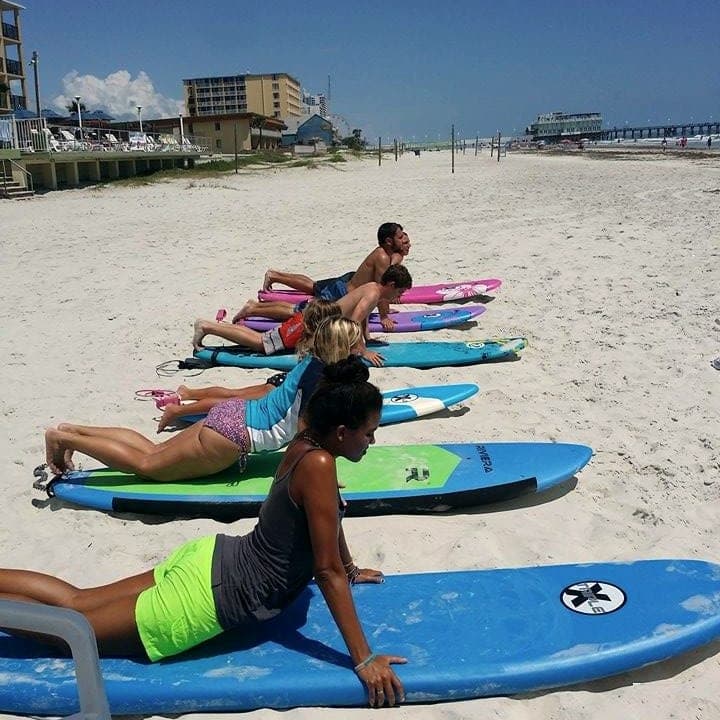
01: The structure
How long is a surf lesson, and how is it structured?
A standard lesson is 1.5 hours, and it follows the same proven shape whether you book a group, semi-private, or private lesson. (Surfing with A Pro is the one exception, that one runs anywhere from an hour to three hours.)
First: the beach-safety tutorial
You don't paddle out cold. Lessons start on the sand, where your instructor covers ocean safety, how to read the break, where to position yourself on the board, the pop-up, and, just as important, how to fall without hurting yourself. It's hands-on: you'll practice pop-ups on the beach until the movement makes sense before you ever get wet.
Then: into the water
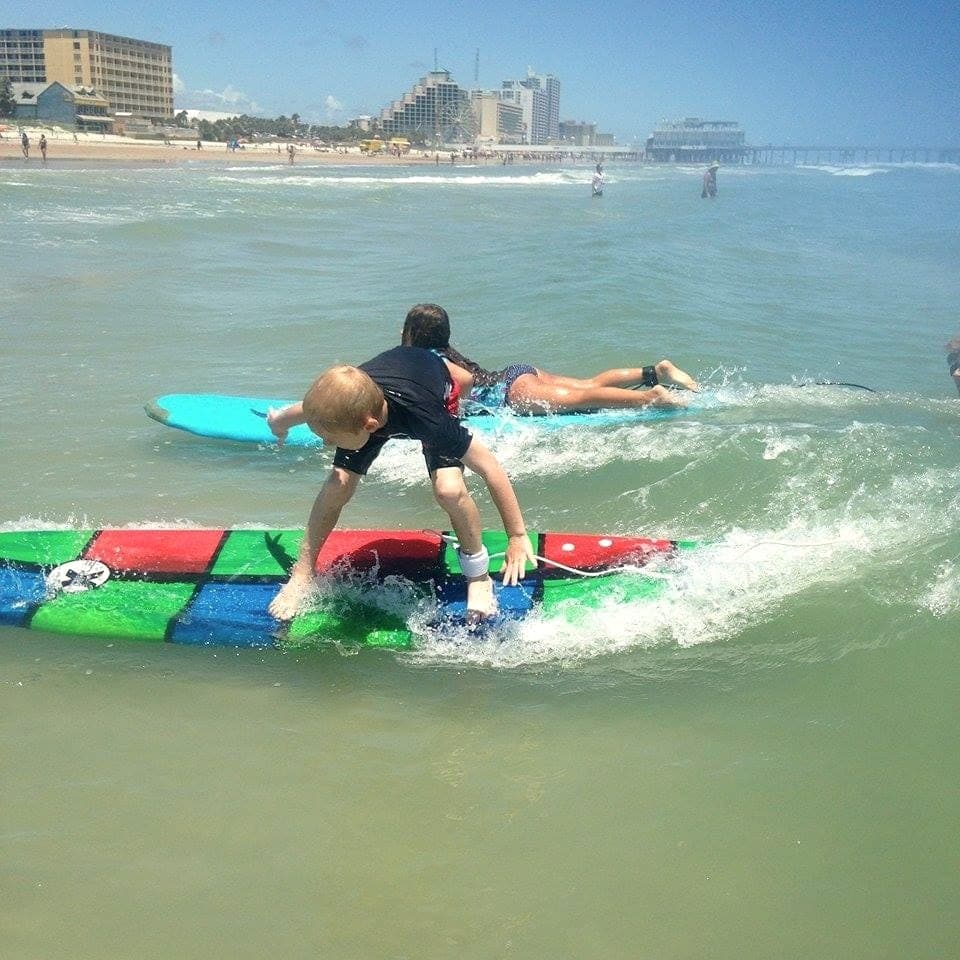
The bulk of the lesson happens in the waist-deep inside section at Sunsplash Park, where the waves are small and forgiving. Your instructor is right there in the water with you, steadying the board, timing the sets, calling your pop-up, and coaching every single ride.
After: a free half hour of practice
When the coached portion wraps up, the board is yours for another half hour, free, as long as boards aren't already spoken for. Stay out, keep practicing, and burn what you learned into muscle memory while it's fresh. Students who use that practice window improve noticeably faster than the ones who towel off right away.
“… we went out for 1.5 hours and I was able to get up 6 times!”
02: Your beach bag
What's provided, and what should I bring?
We bring the equipment: a soft-top surfboard suited to your size, a leash, a rash guard if you want one, and a wetsuit in winter when the water turns cold. You bring yourself and the basics:
- A swimsuit you can actually move in, wear it to the beach so you're ready to go.
- Sunscreen, applied before the lesson starts.
- A towel and drinking water.
- Optional: a change of clothes for the ride home.
That's genuinely it. One of the most repeated lines in our Google reviews is some version of “he brought everything.” Showing up unprepared is nearly impossible.
Swimsuit
Sunscreen
Water
Towel
03: Ages & swimming
How old do kids need to be?
Lessons are for ages 7 and up, and there's no upper limit, we teach kids, adults, and retirees, at every level from first-timers with no ocean experience to advanced surfers.
If you're wondering whether your child is ready, or how confident you need to be in the water, that's a conversation worth having before you book. Call Ryan and tell him honestly where you're at, every lesson starts with a beach-safety tutorial on the sand before anyone goes in, and he'd rather set the right expectation than sell you the wrong lesson.
04: The ratio
How big are the groups?
A group lesson is a large group, generally between 6 and 10. Semi-private puts you with just two to four other surfers, and private lessons are one on one with one of our instructors. Pick the one that matches how much individual attention you want: the price list walks through all three.
05: Weather policy
What happens if the weather turns bad on lesson day?
Our policy, word for word: “Florida weather moves fast. If lightning or unsafe conditions come up, the lesson is cancelled on the spot and rescheduled with you directly. Safety first, always.” Lessons are rescheduled, not refunded.
Context for planning: Florida summer afternoons come with pop-up thunderstorms, which is one reason morning lessons are the local move. Rain on its own often isn't a problem, lightning and unsafe surf are. If the ocean cuts your lesson short, we get you back on the schedule directly.
06: The honest odds
Will you actually stand up in your first lesson?
Most students do, “surfing by the end of the lesson” is the phrase that shows up in our Google reviews again and again. Small Daytona waves, big soft boards, and an instructor picking your waves for you stack the odds heavily in your favor. It's why we've always taught under the banner “Learn To Surf Guaranteed.”
And if the ocean refuses to cooperate? That's what the free practice half hour is for, and lesson two. Honest answer from thousands of students: most people are comfortable on the board within one to three lessons.
07: Logistics & prices
Where do lessons meet, and what do they cost?
Lessons meet at Sunsplash Park in Daytona Beach: the south end, at the picnic tables near the showers and the beach stairs. Parking is free, and Volusia County's Lifeguard Headquarters sits at the north end of the same beach, which is exactly the kind of neighbor you want for a first lesson. More logistics live on our know before you go page.
Pricing is simple and per session: group lessons are $70 per person, semi-private $80, private $85, and Surfing with A Pro, a session with Ryan himself, runs $95 for an hour up to $200 for three hours. Every price includes all the gear. Full details are on the prices page.
08: Field questions
First surf lesson FAQ
Q.01What should I wear to a surf lesson?
A comfortable swimsuit you can move in. We provide a rash guard on request, most students wear one over their suit, and a wetsuit in winter. Leave jewelry and watches in the car.
Q.02Do you provide the surfboard?
Yes. Every lesson includes a soft-top surfboard sized to you, plus the leash, a rash guard on request, and a wetsuit in winter. If you want more water time afterward, we also do surfboard rentals by the hour.
Q.03Is one surf lesson enough to learn to surf?
One lesson is usually enough to stand up and ride whitewater, most of our students do. To get comfortable on the board, plan on one to three lessons, then practice. Multi-day surf camps run one, three, or five days for people of all ages.
Q.04How young can my child start?
Lessons start at age 7. If your child is younger, or you're unsure they're ready, call and talk it through with Ryan, he'll tell you straight rather than sell you a lesson that won't work.
Q.05What if it rains on lesson day?
Rain alone often isn't a problem, lightning is. Florida weather moves fast. If lightning or unsafe conditions come up, the lesson is cancelled on the spot and rescheduled with you directly. Safety first, always. Lessons are rescheduled, not refunded.
Q.06How do I book a first lesson?
Call (386) 308-9951, lessons are by appointment, and Ryan sets a time around the tide and your schedule, or send a lesson request online and we'll get back to you to lock one in.
Ready for your first wave?
386-308-9951Call or text Ryan to grab a spot, same-day lessons happen more often than you'd think, or send a request online and we'll call you back. Group lessons are $70 per person, all gear included.