Reading the water
The station's reading list · three field guides
Learn to Surf
01: Start here
Three guides, three kinds of reader
GUIDE 01
Daytona Beach Surf Conditions for Beginners
Planning a trip, picking a season, or asking the shark question, the local conditions picture.
GUIDE 02
Your First Surf Lesson: What to Expect
Lesson booked (or about to be), the 1.5-hour structure, what to bring, ages, and the weather policy.
GUIDE 03
Learn to Surf on Florida's East Coast
Still deciding where to learn, why this coast works, the fundamentals, and the progression path.
02: From the station log · the original article
Learning to Surf at Vast Oceans Surf and SUP
Daytona Beach, Florida (Surf with a Pro)
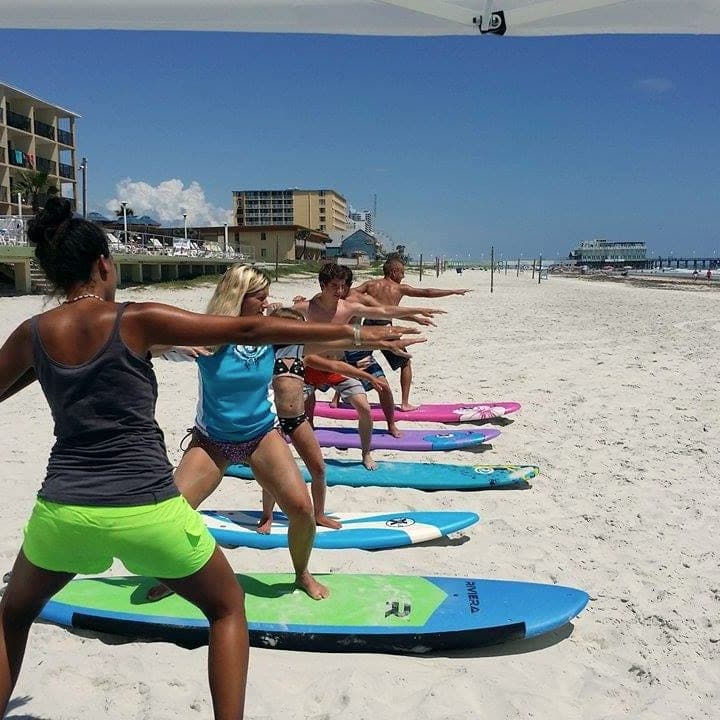
Learning to Surf in Daytona Beach with Ryan Ragan, an Internationally Renowned Surfer, will probably be one of the most memorable experiences you will have during your stay in Daytona. Ryan has been surfing his whole life; sweeping his first contest at age 14 before deciding to make a career of it. Ryan has been competing and free surfing ever since, being featured in magazines and videos around the world. In recent years he has been recognized as one of the best surfing instructors in the world. Ryan now makes the world’s most famous beach, Daytona Beach, his home. Vast Oceans Surf and SUP shop is located at the International Speedway Beach approach in Daytona Beach, just off the beach ramp, next to Rick’s Surf Bar. It is also just an hour east of Orlando, Disney, and the Universal theme parks.

Ryan likes to teach his students proper surfing skills, with an emphasis on “Technique and Style” in his approach. His experience in the world of professional surfing combined with a patient approach to teaching allows him to get “groms” of all ages into the waves for their first time. Central Florida surfers enjoy these professional instructions all spring, summer, and year-round, right on the beach in Volusia County.
Positioning and how you lay on your surfboard is extremely important if you want to catch waves, be safe, and have a good time. When laying on the board, it is important to keep your legs and feet together with your body centered on the surfboard. You should also keep your ankles and toes at the tale of the surfboard while also making sure your body is far enough back from the nose of the board to prevent you from nose diving when dropping in.
“Ryan's patience, encouragement, and ability to break down techniques made the lesson enjoyable and effective.”
03: Falling correctly
Safety and Protection, or how to fall correctly.
To help you prevent the most common wipe out, the nose dive, try staying back on your board when paddling or dropping in. If you do ever fall cover your face and head with your hands and forearms. If you fall, fall flat on your stomach, like a gentle belly flop, or if you fall backwards, fall flat on your rear end to help soften the fall. Never ever, under any circumstances, dive head first since you can severely damage your face, head, and neck. When falling forward put your hands out in front of you to break your fall. Surfing in the small waves off the East Coast of Florida can become quite dangerous if you fall incorrectly since falling in shallow waters can cause someone to break their neck if not careful.
Learning to understand the ocean and how it operates is essential to surfers and any individuals who express interest in our planet and oceans. What is the ocean? How is it different than lakes and seas? What is the temperature and pressure of the oceans? How are waves created? These are some of the very important and interesting questions people have about our oceans that are important to learn about. Knowing and understanding ocean storms and pressures, helps people predict when to go surfing.
04: Reading the water
What tide is it?
Tides are very long-period waves that move through the oceans in response to the forces exerted by the sun and moon. They originate in the oceans and progress out toward the coastlines, which appear as the regular rise and fall of the sea surface. Tide heights affect wave conditions, as increases, and decreases in water levels change the shapes (pitch) of the waves.
Talk to a pro before you book anything
386-308-9951Lessons are by appointment: call and Ryan will find you a window that suits the tide and your schedule.